Why You Must Start Optimizing for Brand Search in 2026
In 2026, consistent brand references within reputable third-party publications have emerged as a crucial component of modern SEO strategies, effectively complementing traditional backlink methodologies.
Many marketing teams overlook the optimization of branded search terms, perceiving it as too obvious to pursue. Similarly, agencies fail to advise clients on optimizing for brand-related keywords, as they seek to chase more ambitious objectives to justify their retainers.
If the objective is to generate revenue through search rather than merely to achieve higher rankings, branded keywords warrant primary focus. It should go without saying that the ultimate goal of search efforts ought to be revenue generation—not clicks—unless compensation is explicitly tied to site visits.
Although backlinks continue to hold significance, AI-powered conversational search engines now assess brand legitimacy through a broader range of indicators, including unlinked brand mentions within independent publications. This development signifies an evolution in how search engines interpret brand authority and contextual relevance within the increasingly intricate digital environment.
Search engines have become sophisticated in how they evaluate brand credibility, and consistent mentions across trusted sources served as powerful validation signals.
When your brand gets mentioned consistently across independent publications with consistent naming and context, it helps search engines confirm that brand’s existence, authority, and relevance within its niche.
Repeated mentions across independent sources strengthen what search experts call entity confidence, helping search algorithms understand not just that a brand exists, but what it does and why it matters. This differs significantly from self-published brand claims, as third-party references carry more weight in establishing credibility.
From Traffic Generation to Revenue Enablement
One of the most significant transformations in modern SEO is the transition from vanity metrics to performance-driven outcomes. Rankings and traffic metrics, once considered primary indicators of success, no longer suffice. Leading organizations now prioritize how organic visibility contributes to pipeline development, qualified lead acquisition, and long-term customer value.
This paradigm shift has compelled marketers to reevaluate the role of SEO within the broader business strategy. Content creation is no longer a standalone exercise; it now serves to support sales engagement, nurture prospects throughout the conversion funnel, and establish trust well before a purchase decision is made.
Today’s most successful brands recognize that effective organic search performance extends beyond visibility—it is fundamentally about being chosen.
Branded Terms Drive Conversion
Branded search terms consistently deliver the highest click-through and conversion rates. The reasoning: individuals who search for a brand by name already possess familiarity or affinity with it. They may have encountered the brand through referrals, advertisements, media coverage, or prior experience with its products or services.
Such users are not casually exploring—they are intentionally seeking the brand. Their queries carry strong commercial intent, converting at rates typically associated with prospects already positioned deep within the sales funnel.
The visibility that fuels branded search is already earned through prior marketing investments. Branded search, therefore, represents the natural continuation of those efforts—and capturing it is essential to realizing their full return.
5 Practical Steps to Optimize for Branded Search
Optimizing for branded search terms can directly boost your revenue. Here are five practical steps to identify and act on them:
1. Find your branded keywords
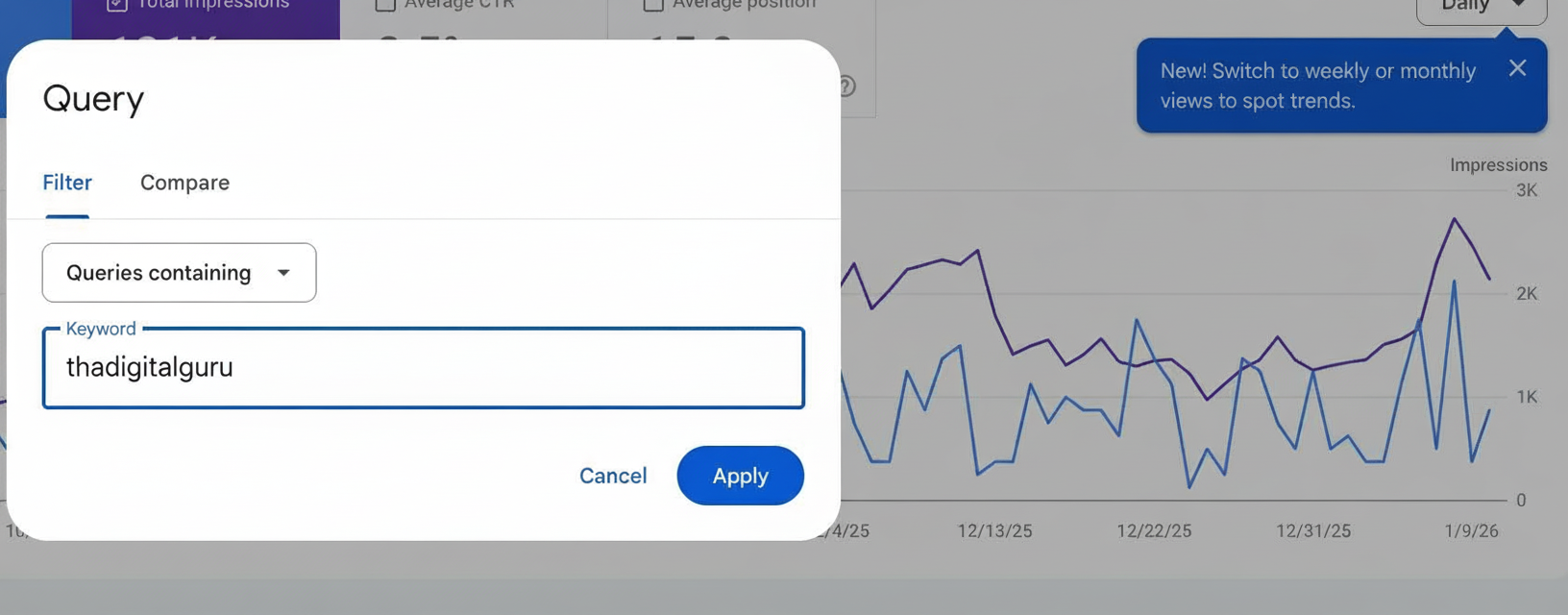
In Google Search Console, filter for your homepage and your brand name. Look for brand-related queries with low impressions—these show where Google doesn’t yet associate your site with those searches. Add or adjust content to include those keywords.
2. Improve low CTR results
Still on your homepage, find branded queries with high impressions but low click-through rates. Update your titles and meta descriptions to make them more engaging and relevant. Treat these like ad copy—strong messaging can quickly increase clicks.
3. Fix mismatched brand pages
Check across your whole site for branded queries going to the wrong pages, such as blog posts or outdated content. Create or update dedicated pages that align with what users are searching for so you convert their intent effectively.
4. Use Google suggestions
Type your brand name into Google and note the autocomplete suggestions. These represent real, common searches about your brand. Each suggestion should be covered on your site through new pages or content updates.
5. Answer “People also ask”
Search your brand and review the related questions and “People also ask” sections. Create content that gives direct, useful answers—pricing pages, product comparisons, or use cases work well.
Start Here Before Chasing Non-Branded Terms
Start here before chasing non-branded terms. If you aren’t converting people already searching for you, you’ll struggle with broader keywords. By optimizing your branded searches first, you build a stronger base for all your SEO efforts.